
PapersFlow vs SciSpace: Verified Citation Rigor vs Reading Comprehension (2026)
Verified Sep 16, 2026 by Tooliverse Editorial
PapersFlow and SciSpace are both AI research assistants built to help academics search literature, read papers, and draft manuscripts with grounded citations, aimed at students, researchers, and institutions.
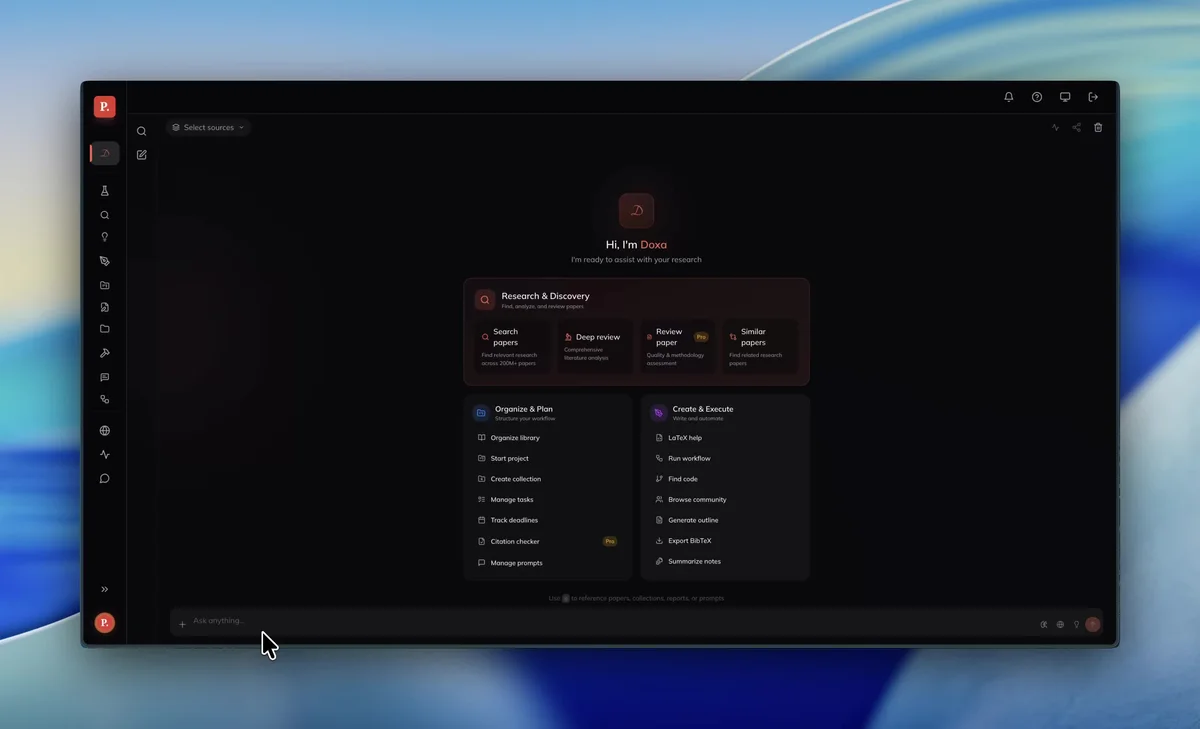
 PapersFlow
Doxa research assistant workspace displaying categorized research tools and an 'Ask anything' prompt in a modern dark-mode interface.
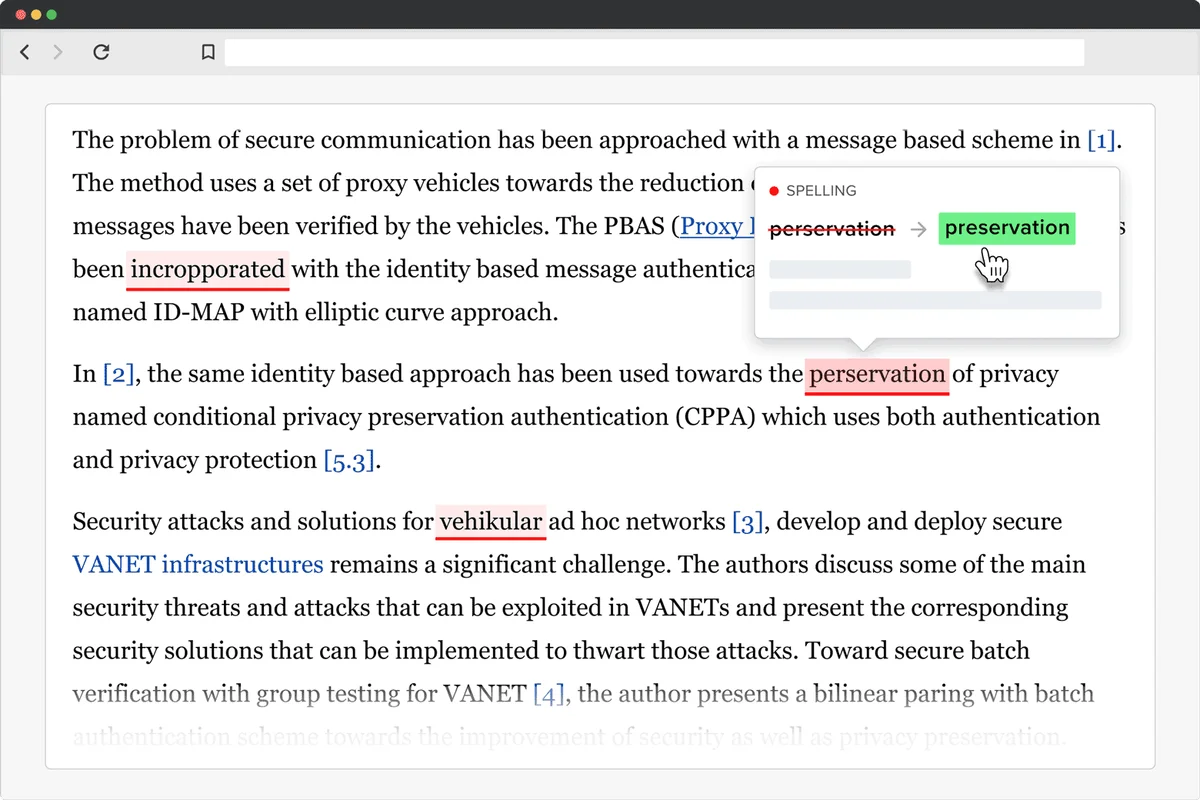
 SciSpace
SciSpace document editor showing AI-powered spelling correction suggestions in a clean web interface.
 PapersFlow
papersflow homepage displaying AI-powered research and writing workspace with integrated tools in a modern, clean interface.
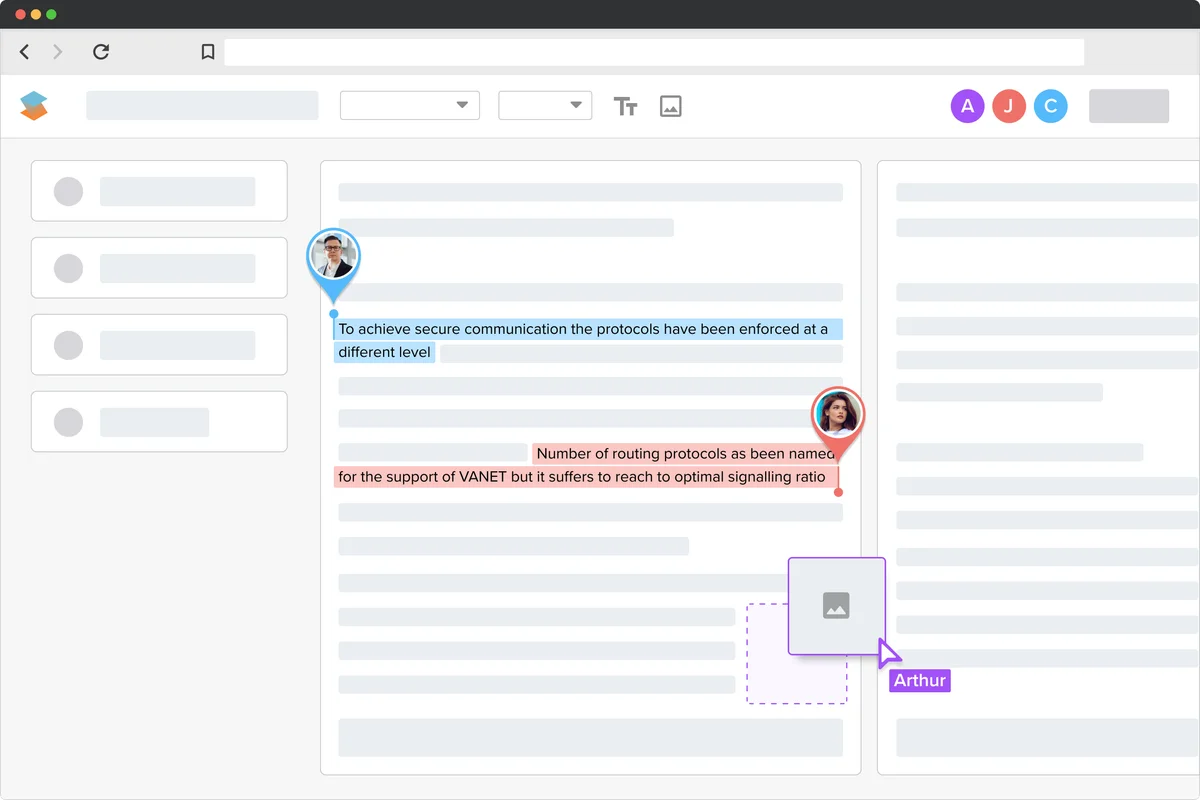 SciSpace
SciSpace document editor showing highlighted text with user comments and a user dragging an image to insert into the document in a clean UI.
PapersFlow vs SciSpace Review: Tooliverse Consensus






Based on 1,411 verified reviews across 7 platforms,
combined with Tooliverse's expert analysis
PapersFlow leads on trust and depth: its Chain of Verification system and PRISMA workflow automation earn praise from researchers doing systematic reviews and theses, backed by a 9.35/10 score across 326 reviews. SciSpace, scoring 8.28/10 from 1,085 reviews, wins on accessibility — its Copilot instantly simplifies dense text and its browser extension fits into daily reading habits. PapersFlow demands more setup time across seven specialized agents; SciSpace's credit-based pricing can feel opaque to heavy users. Neither tool is objectively better — they solve different stages of the research process.
Bottom line: Choose PapersFlow for rigorous, verification-heavy systematic reviews and LaTeX manuscript work; choose SciSpace for everyday paper reading, quick explanations, and browser-based literature review.
Where Each Tool Wins
Strengths unique to each tool (what both do well is covered further down)
PapersFlow- •Ensures academic integrity through a rigorous Chain of Verification system for citationsmentioned in 142 reviews
- •Integrates a full LaTeX environment that compiles and manages references seamlesslymentioned in 96 reviews
- •Features specialized AI agents like Doxa that synthesize deep research insightsmentioned in 72 reviews
SciSpace- •Simplifies technical language and complex paragraphs through instant AI explanationsmentioned in 245 reviews
- •Integrates seamlessly into the browser to analyze PDFs on any webpagementioned in 167 reviews
- •Decodes mathematical formulas and tables within scientific documents effortlesslymentioned in 118 reviews
Each Tool’s Watch-Outs
Drawbacks unique to each tool
PapersFlow- •Presents a steep learning curve for mastering advanced multi-agent research workflowsmentioned in 45 reviews
- •Requires specific prompting techniques to get the most out of specialized agentsmentioned in 32 reviews
- •Subscription pricing can be a significant barrier for students on tight budgetsmentioned in 19 reviews
SciSpace- •Credit-based pricing system can feel expensive and opaque for heavy usersmentioned in 84 reviews
- •Occasional hallucinations in AI summaries require manual verification of sourcesmentioned in 72 reviews
- •Refund process and customer support response times can be inconsistentmentioned in 34 reviews
Which Tool Is Best for Your Use Case?
| Use case | PapersFlow | SciSpace |
|---|---|---|
Systematic literature reviews (PRISMA) PapersFlow automates PRISMA workflow stages and users credit it with saving dozens of hours (118 mentions), while SciSpace also produces PRISMA outputs alongside Zotero import (142 mentions). | Excellent | Strong |
Reading and understanding dense papers SciSpace's Copilot instantly simplifies technical language and paragraphs (245 mentions), a use case PapersFlow's feature set doesn't specifically target. | Fair | Excellent |
Manuscript drafting with citations PapersFlow's Compose tool grounds citations in a personal library with a built-in LaTeX editor (96 mentions), while SciSpace offers an AI Writer plus journal formatting across 40,000+ templates. | Excellent | Strong |
Budget-conscious students SciSpace Premium starts at $12/month (annual billing) versus PapersFlow's academic-discounted Plus at $14/month, and PapersFlow reviewers specifically flag pricing as a barrier for students (19 mentions). | Fair | Strong |
On-the-go mobile access PapersFlow has no native mobile app (38 mentions) while SciSpace's mobile app offers significantly fewer features than its web platform (56 mentions). | Fair | Fair |

Some readers want a paper decoded. Others want it doubted before they'll trust it. That split explains why the review counts pull in opposite directions: citation-verification praise comes from people who won't cite a line until it's checked, while explanation-focused praise comes from people who just need the paragraph to make sense right now. Both scores hold up — this is a workflow split, not a quality gap. If daily reading and fast comprehension are the job, SciSpace's $12/month Premium tier covers it; the moment a systematic review demands verified citations, PapersFlow's $20/month Plus tier earns its keep.
PapersFlow vs SciSpace Pricing 2026
PapersFlow starts at $20/month on Plus after a free tier to trial it, while SciSpace starts at $12/month on Premium. Over a full year that is roughly $240 for PapersFlow versus $144 for SciSpace with annual billing.
PapersFlowPlus
- Unlimited chat & Thinking mode
- 100 Prism runs/month
- Deep Web Search (powered by Exa)
- Chain of Verification & AI Paper Reviews
- Seamless Zotero, Notion & Mendeley sync
SciSpacePremium
- 1,200 monthly credits
- More papers from Google Scholar, PubMed, ArXiv
- Pro Model Access
- Unlimited File Downloads, Literature Reviews, Chat with PDF, AI Detections
- Up to 4 Parallel Agent Chats
The Costs the Pricing Pages Don't Mention
- Free tier is a demo only
- PapersFlow's free plan caps out at 50 chat messages and just 2 Prism runs per month, described as useful only for a test drive before upgrading.
- Credit system can run out mid-project
- SciSpace's Advanced tier ($70/month) adds unlimited refreshes of 5,000 credits when the monthly limit is hit, implying lower tiers can hit hard stops without this feature.
- Academic discount requires eligibility
- PapersFlow's $14/month Plus price only applies with a 30% academic discount; without it, Plus is $20/month.
- Annual billing lock-in for SciSpace's low price
- SciSpace's $12/month Premium and $70/month Advanced prices are billed annually, so the low monthly figure requires committing to a year upfront.
PapersFlow vs SciSpace: Feature Comparison
As advertised on each tool's own site — "not advertised" doesn't necessarily mean missing.
| Feature | PapersFlow | SciSpace |
|---|---|---|
| Both tools | ||
| Chat/Q&A with research papers | ✓ | ✓ |
| Deep research across paper databases | ✓ | ✓ |
| AI-assisted manuscript writing | ✓ | ✓ |
| Systematic review workflow automation | ✓ | ✓ |
| PDF section-level search/analysis | ✓ | ✓ |
| Reference manager sync | ✓ | ✓ |
| Specialized subject-matter agents | ✓ | ✓ |
| Highlighted by PapersFlow | ||
| Citation verification / accuracy | ✓ | not advertised |
| Citation-linked presentation slides | ✓ | not advertised |
| Large academic paper database | ✓ | not advertised |
| Built-in LaTeX editing | ✓ | not advertised |
| Highlighted by SciSpace | ||
| Journal/manuscript formatting | not advertised | ✓ |
| Browser extension for on-page analysis | not advertised | ✓ |
| AI-generated content detection | not advertised | ✓ |
PapersFlow vs SciSpace: User Reviews
Selected to show the range — the strongest praise and the most useful criticism for each.
PapersFlowSciSpacePapersFlow"Chain of Verification is a game changer that eliminates the need to manually verify every citation. Finally, an AI tool I can trust for my thesis."
SciSpace
"I started using Scispace over a year ago and it is a great program. I did several lit searches for a project I was working on and it was fast, efficient, and easy to use."
PapersFlow"The Doxa command center makes it easy to manage 400+ papers without feeling overwhelmed. The search is incredibly fast across the whole database."
SciSpace"SciSpace has completely changed how I approach my literature reviews. The Copilot feature is like having a professor sitting next to me explaining the hard parts."
PapersFlow"Steep learning curve for advanced workflows, but the accuracy is unmatched. It took me a few days to get the hang of the agents."
SciSpace"Very limited. You can't access anything in your account though (library, notes, etc). It would be good to at least be able to search and add to your library."
PapersFlow vs SciSpace: Frequently Asked Questions (FAQs)
Which tool has better citation accuracy, PapersFlow or SciSpace?
PapersFlow runs every claim through a Chain of Verification (CoVE) system that independently fact-checks citations before they reach the user, cited by 142 reviewers as a trust-builder. SciSpace backs answers with citations from its 270M+ paper database but reviewers note occasional hallucinations in AI summaries (72 mentions) that require manual verification.
Is PapersFlow or SciSpace cheaper for individual researchers?
SciSpace Premium starts at $12/month billed annually with 1,200 monthly credits, while PapersFlow's Plus tier is $20/month (or $14/month with a 30% academic discount). Both target individual researchers, but SciSpace's entry price is lower on paper, though its credit system is flagged by 84 reviewers as feeling expensive and opaque for heavy users.
Does either tool have a mobile app?
SciSpace offers a mobile app, but reviewers note it has significantly fewer features than the web platform (56 mentions). PapersFlow has no native mobile app at all (38 mentions), requiring browser-based access.
Which tool is better for systematic reviews using PRISMA?
Both automate PRISMA-related work: PapersFlow's Workflows Automation handles screening, extraction, and systematic review stages, with 118 reviewers citing dozens of hours saved. SciSpace's Literature Review feature also produces PRISMA outputs and imports from Zotero, drawing 142 mentions for automating literature reviews.
How large is each tool's paper database?
PapersFlow indexes 474M+ academic papers across fields like biomedical sciences, computer science, and law, with dual-source search. SciSpace's database covers 270M+ papers, cited by 189 reviewers for delivering citation-backed answers.
Which tool is easier to learn for a first-time user?
SciSpace's Chat with PDF and Copilot are built around instantly explaining confusing passages, a workflow 245 reviewers credit for simplifying technical language. PapersFlow's seven specialized agents deliver more depth but come with a steep learning curve noted by 45 reviewers.
How this comparison works
Consensus Scores aggregate verified reviews from 8 platforms — Reddit, Product Hunt, G2, Capterra, app stores and more — weighted by source reliability.
Features and pricing come from each tool's official site, last verified Sep 16, 2026. Verdicts are computed from this data.
The Editor's Note is our experts' read of what the data means for your decision — and comparison placement is never for sale. Editorial Policy
Related Comparisons
Best PapersFlow & SciSpace Alternatives

Elicit
Understand what science already knows, so you can discover the unknown, with evidence you can trace.
Undermind
Find the papers others miss and build real command of your research field with AI that reads the literature for you.

Scite
Get research answers you can verify, grounded in real papers and Smart Citations.