
CoGrader vs EssayGrader: Feedback Depth vs Grading Speed (2026)
Verified Sep 16, 2026 by Tooliverse Editorial
CoGrader and EssayGrader are both AI essay-grading platforms built for K-12 and higher-ed teachers who want to score student writing against a rubric and hand back detailed feedback without spending a weekend doing it by hand.
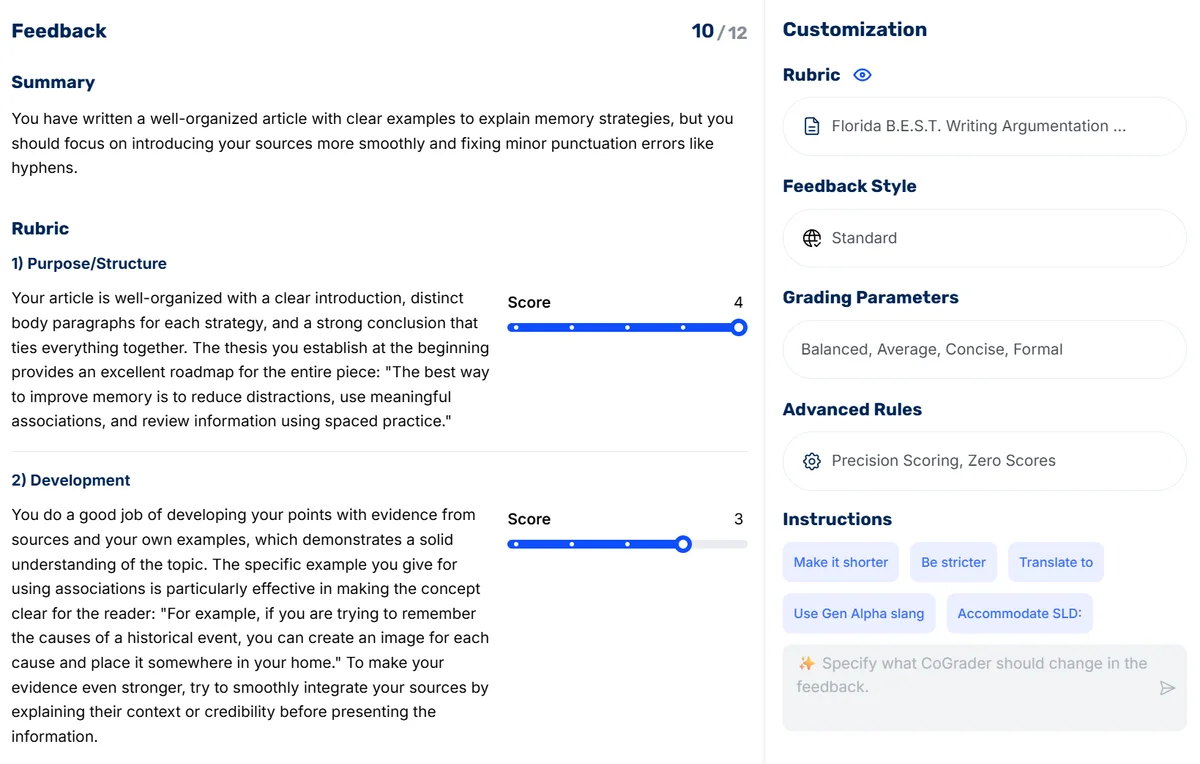
 CoGrader
CoGrader workspace UI showing essay feedback and customization options with a clean, modern interface.
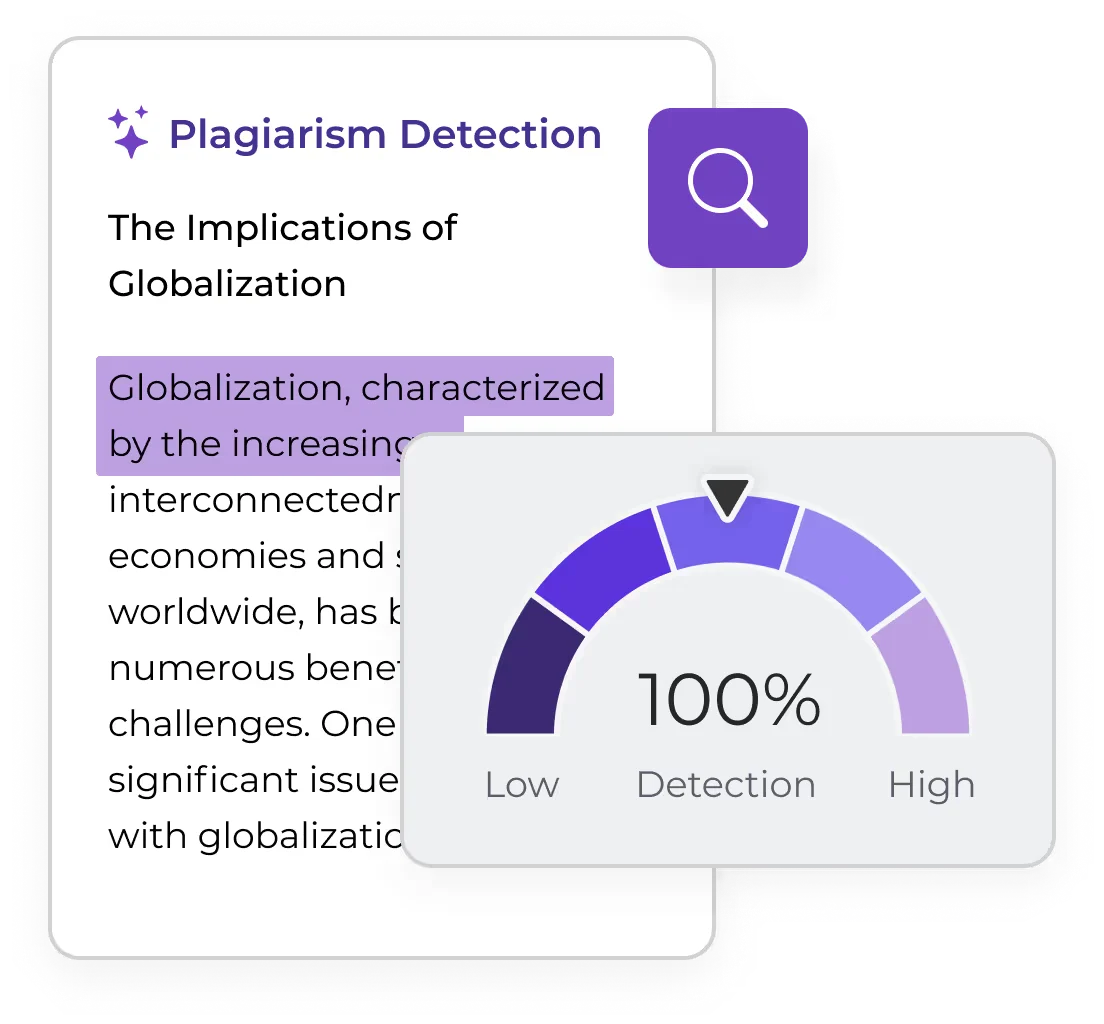
 EssayGrader
Essaygrader plagiarism detection showing highlighted text and 100% match, with a sleek document editor and results gauge.
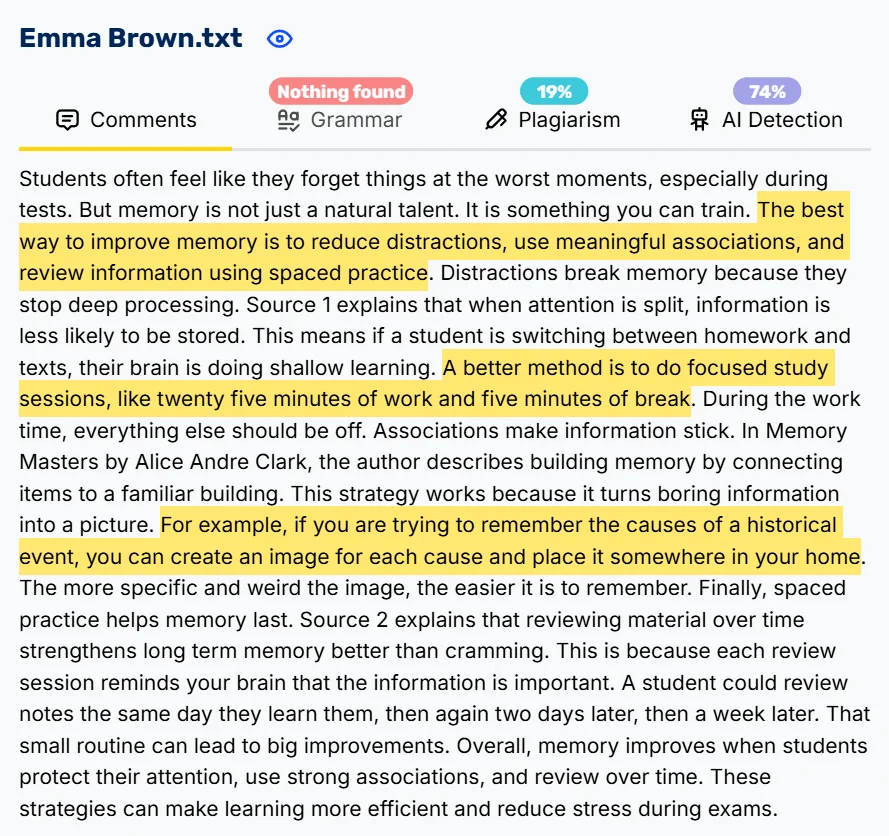 CoGrader
Cograder workspace showing a student's essay with grammar, plagiarism, and AI detection results displayed.
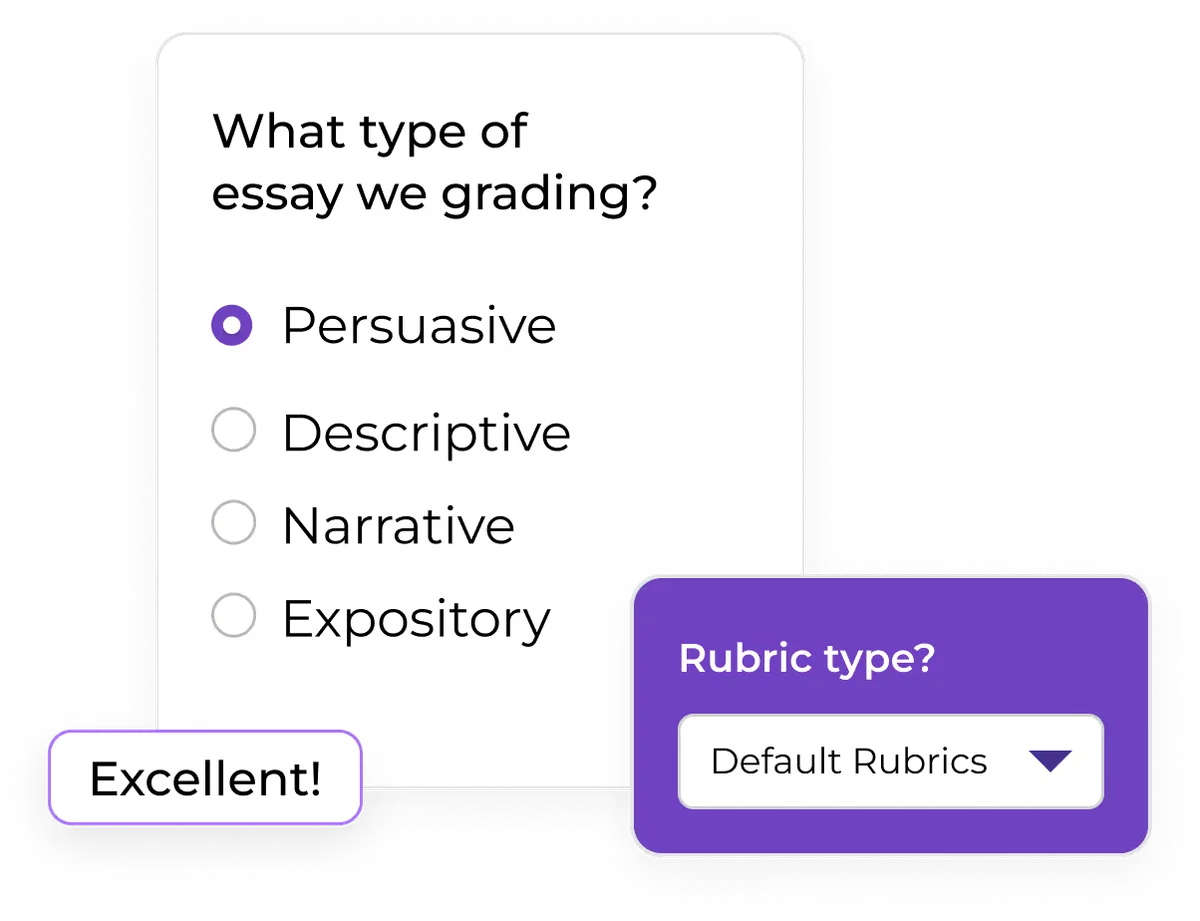 EssayGrader
Essaygrader workspace showing essay type and rubric selection with a clean, modern interface.
CoGrader vs EssayGrader Review: Tooliverse Consensus





Based on 380 verified reviews across 6 platforms,
combined with Tooliverse's expert analysis
CoGrader edges out EssayGrader on consensus score (9.40 vs 9.20) and reviewers single out its "Glow and Grow" feedback and AP/IB rubric depth, though its free tier caps out sooner in feature scope. EssayGrader draws far more reviews (232 vs 148), claims a steeper 95% time reduction, and backs its accuracy with a published methodology across 22,000+ essays. Both share the same core weakness: AI detection can misfire and needs manual review.
Bottom line: Choose CoGrader if personalized feedback quality and AP/IB rubric depth matter most; choose EssayGrader if you want a larger rubric library, published accuracy data, and a slightly cheaper full-class-load tier.
Where Each Tool Wins
Strengths unique to each tool (what both do well is covered further down)
CoGrader- •Generates highly personalized "Glow and Grow" feedback that students find actionable and encouragingmentioned in 72 reviews
- •Offers a robust library of pre-built rubrics for AP, IB, and state-standardized assessmentsmentioned in 42 reviews
EssayGrader- •Reduces grading time by up to 95%, allowing teachers to process entire class sets in minutesmentioned in 112 reviews
- •Maintains impressive grading consistency across large batches of essays, significantly reducing human biasmentioned in 54 reviews
Each Tool’s Watch-Outs
Drawbacks unique to each tool
CoGrader- •Occasional formatting discrepancies when syncing feedback back to certain LMS platformsmentioned in 19 reviews
- •Lacks full GDPR compliance documentation, which may pose procurement hurdles for EU/UK institutionsmentioned in 12 reviews
EssayGrader- •Feedback can sometimes be repetitive or overly verbose in longer academic papersmentioned in 12 reviews
- •Lacks deep integration with some niche or older LMS platforms outside of the major providersmentioned in 8 reviews
Which Tool Is Best for Your Use Case?
| Use case | CoGrader | EssayGrader |
|---|---|---|
Solo teacher, single class section Both free tiers work for one section, though CoGrader's 100-submission cap outlasts EssayGrader's 50-essay cap before an upgrade is needed. | Strong | Strong |
Full teaching load across multiple sections EssayGrader's Pro tier grades 350 essays a month at $14.99, while CoGrader's equivalent Standard tier costs $15/month annually or $19 month-to-month for the same 350-submission cap. | Strong | Excellent |
Grading handwritten student work CoGrader accepts photos and scanned handwriting via its Handwriting Support feature, while EssayGrader's Handwritten Essay Grading explicitly reads cursive, print, and messy handwriting from phone or printer photos. | Strong | Excellent |
Building on standardized-test rubrics EssayGrader's library covers 800+ rubrics including GCSE, A-Levels, and Cambridge, versus CoGrader's 500+ rubrics focused on AP, IB, and U.S. state standards. | Strong | Excellent |
District or institution-wide rollout CoGrader's Schools & Districts tier offers bulk user management and institution-wide analytics, while EssayGrader's School District tier offers flexible seat licensing and custom DPAs for up to 25 users. | Strong | Strong |

Both tools promise a rescued weekend; they disagree on how big the class has to get before that promise breaks. CoGrader's reviewers keep praising feedback that sounds like the teacher wrote it, while EssayGrader's much larger review base leans on published accuracy numbers instead of tone. If feedback voice and AP/IB rubric depth matter more than headcount, stay with CoGrader; once a full course load pushes past 100 essays a month, EssayGrader's Pro tier at $14.99/month already covers 350 of them.
CoGrader vs EssayGrader Pricing 2026
CoGrader starts at $19/month on Standard after a free tier to trial it, while EssayGrader starts at $6.99/month on Lite after a free tier to trial it. Over a full year that is roughly $180 for CoGrader versus $84 for EssayGrader with annual billing.
CoGraderStandard
- 350 student submissions per month
- Handwritten assignments
- Grammar checking and AI detection
- Plagiarism detection
- Chat & email support (48hr response)
EssayGraderLite
- Grade 100 essays/mo
- Summarize 100 essays/mo
- 2000 essay word count limit
- Google Classroom integration
- Canvas LMS Integration
The Costs the Pricing Pages Don't Mention
- Free tier forces early upgrade
- CoGrader's Starter caps out at 100 submissions a month and EssayGrader's Basic caps at 50, so any teacher with more than one class section will likely need to upgrade to a paid tier quickly.
- Monthly vs. annual pricing gap
- CoGrader's Standard tier costs $15/month only when billed annually; paying month-to-month bumps it to $19/month for the same 350-submission cap and feature set.
- Manual review still required
- Both tools require teachers to manually verify AI-detection flags and review AI-suggested grades before finalizing them, so neither eliminates grading oversight entirely.
- Custom pricing for institutions
- Both CoGrader's Schools & Districts/Higher Ed tiers and EssayGrader's School District/Higher-Ed tier list no public price, meaning institutional buyers must negotiate custom quotes.
CoGrader vs EssayGrader: Feature Comparison
As advertised on each tool's own site — "not advertised" doesn't necessarily mean missing.
| Feature | CoGrader | EssayGrader |
|---|---|---|
| Both tools | ||
| Rubric-based AI grading against custom or preloaded rubrics | ✓ | ✓ |
| AI-generated content detection | ✓ | ✓ |
| Plagiarism/originality checking | ✓ | ✓ |
| Automatic rubric creation or customization | ✓ | ✓ |
| Google Classroom, Canvas & related LMS sync | ✓ | ✓ |
| Handwritten submission grading | ✓ | ✓ |
| Pre-built standards-aligned rubric library | ✓ | ✓ |
| Class-wide performance analytics and dashboard | ✓ | ✓ |
| Bulk/whole-class grading in one pass | ✓ | ✓ |
| Highlighted by CoGrader | ||
| Inline grammar feedback | ✓ | not advertised |
| Multilingual submission grading | ✓ | not advertised |
| Highlighted by EssayGrader | ||
| Video or oral submission grading | not advertised | ✓ |
| AI-generated essay summaries | not advertised | ✓ |
| Published grading accuracy methodology | not advertised | ✓ |
CoGrader vs EssayGrader: User Reviews
Selected to show the range — the strongest praise and the most useful criticism for each.
CoGraderEssayGraderCoGrader"I recently had my 85 sixth grade students write a narrative that would have taken me weeks to grade. With CoGrader, they were graded with amazing feedback in, literally, seconds."
EssayGrader"Essay Grader has changed my life. Grading essays was the most time consuming aspect of my job, and typically, students were making the same mistakes and needed the same feedback."
CoGrader"I used CoGrader to assess 30 personal narratives with my own rubric. It was amazing! I loved all the personalized feedback for each student."
EssayGrader"Essay grader is really useful, convenient, and powerful. It gives you flexibility to create your own scoring rubrics, which is something other systems did not have."
CoGrader"The feedback is great, but the setup for custom rubrics took me longer than expected."
EssayGrader"Finally a tool that understands the specific challenges teachers face. The bulk upload feature is a lifesaver for my 10th-grade English sections."
CoGrader vs EssayGrader: Frequently Asked Questions (FAQs)
Which tool has a more generous free plan, CoGrader or EssayGrader?
CoGrader's free Starter tier allows 100 student submissions per month, double EssayGrader's free Basic tier cap of 50 essays per month. Both free tiers suit a single class section but run out fast for teachers with multiple sections.
Does CoGrader or EssayGrader grade handwritten essays?
Both do. CoGrader's Handwriting Support accepts uploaded PDFs, DOCX files, or photos of handwritten work, while EssayGrader's Handwritten Essay Grading reads cursive, print, and messy handwriting from phone, tablet, or school printer photos and transcribes it before grading.
Which is cheaper for a full class load, CoGrader or EssayGrader?
For the same 350-submission monthly cap, EssayGrader's Pro tier costs $14.99/month while CoGrader's Standard tier costs $15/month billed annually (or $19/month billed monthly). The two are close in price at that tier.
Do CoGrader and EssayGrader integrate with Google Classroom and Canvas?
Yes, both list native two-way integrations with Google Classroom and Canvas that import assignments and sync grades and feedback back to the gradebook. CoGrader also lists Schoology integration, and EssayGrader names Canvas SpeedGrader specifically for exporting feedback.
How reliable is AI detection in CoGrader versus EssayGrader?
Both tools flag AI-generated content but warn of imperfect accuracy: CoGrader's watch-outs note AI detection can produce false positives requiring manual verification (15 mentions), and EssayGrader's watch-outs note its detector occasionally flags original student work (15 mentions).
Which tool has more verified reviews backing its score?
EssayGrader's 9.20/10 consensus score is drawn from 232 verified reviews, compared to CoGrader's 9.40/10 score from 148 verified reviews.
How this comparison works
Consensus Scores aggregate verified reviews from 8 platforms — Reddit, Product Hunt, G2, Capterra, app stores and more — weighted by source reliability.
Features and pricing come from each tool's official site, last verified Sep 16, 2026. Verdicts are computed from this data.
The Editor's Note is our experts' read of what the data means for your decision — and comparison placement is never for sale. Editorial Policy
Best CoGrader & EssayGrader Alternatives
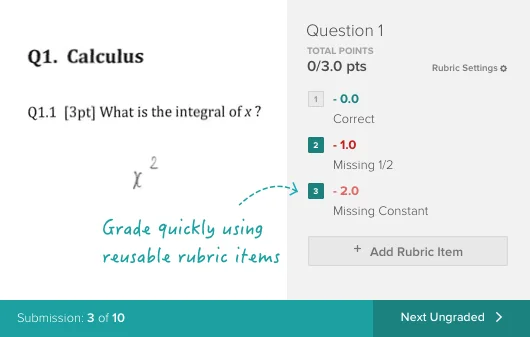
Gradescope
Grade paper, code, and online assessments in half the time with consistent, rubric-based feedback.
Brisk Teaching
AI that works right inside the tools you already teach with — no extra tabs, no extra logins.

MagicSchool
AI built for K-12 that gives teachers their time back and keeps students safe.