
Connected Papers vs ResearchRabbit: One-Shot Field Maps or Ongoing Discovery (2026)
Verified Sep 29, 2026 by Tooliverse Editorial
Connected Papers and ResearchRabbit are visual literature-discovery tools that start from a single paper and map related research. Both appeal to students and academics doing literature reviews, and both sync with Zotero, but they differ in workflow and pricing.
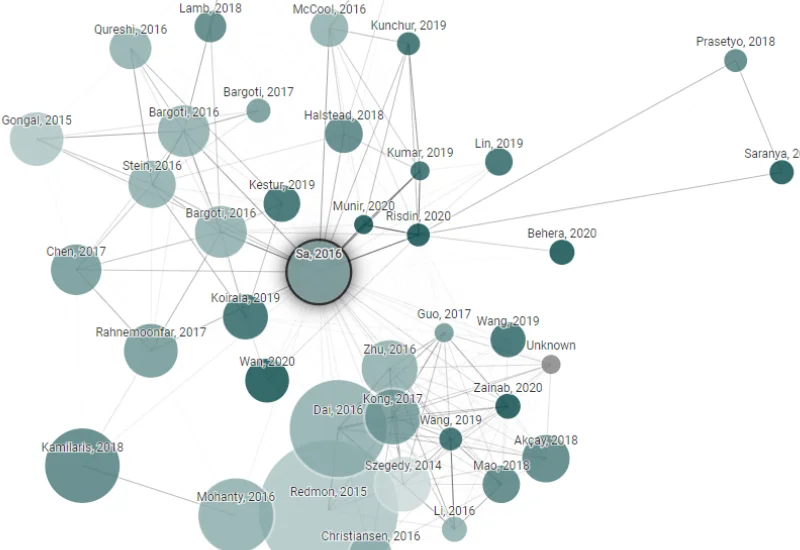
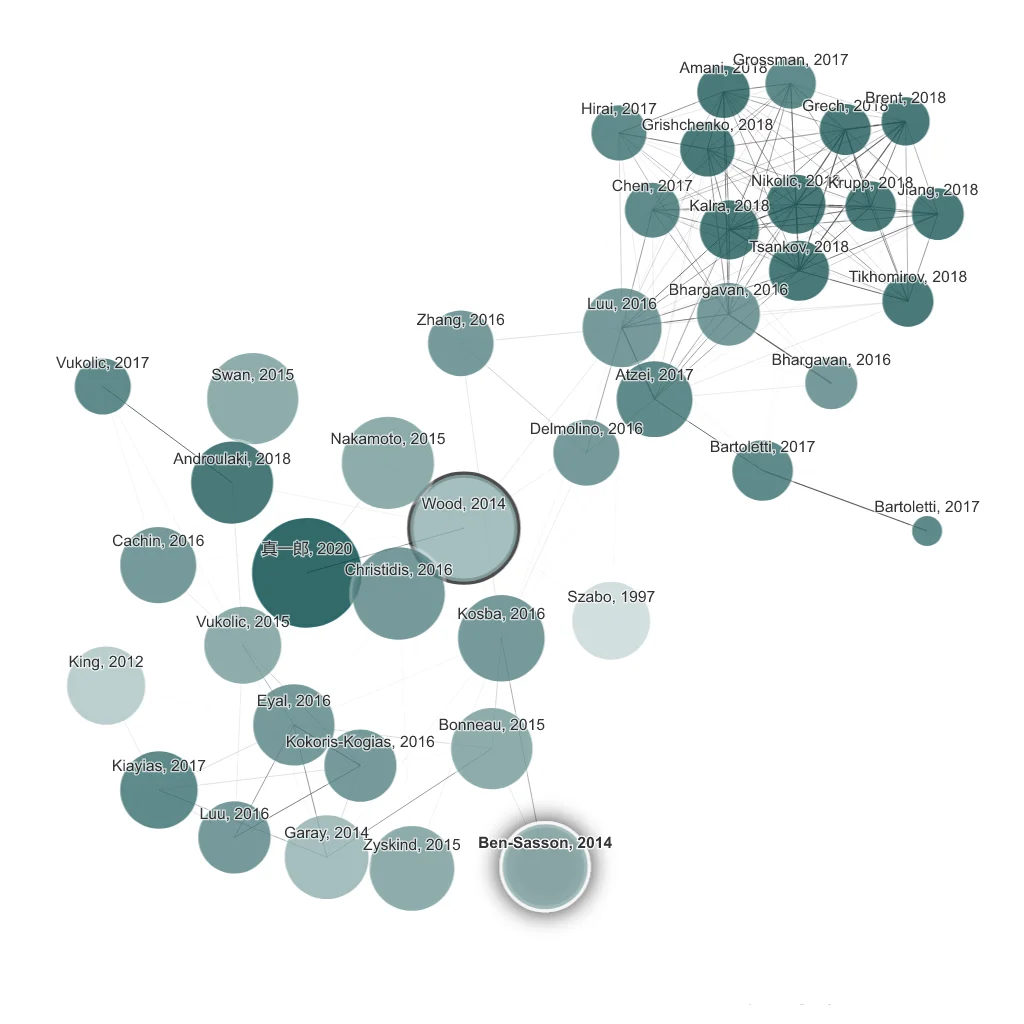
Connected-Papers network visualization showing interconnected research papers and citation relationships with a clean, interactive graph interface.
 ResearchRabbit
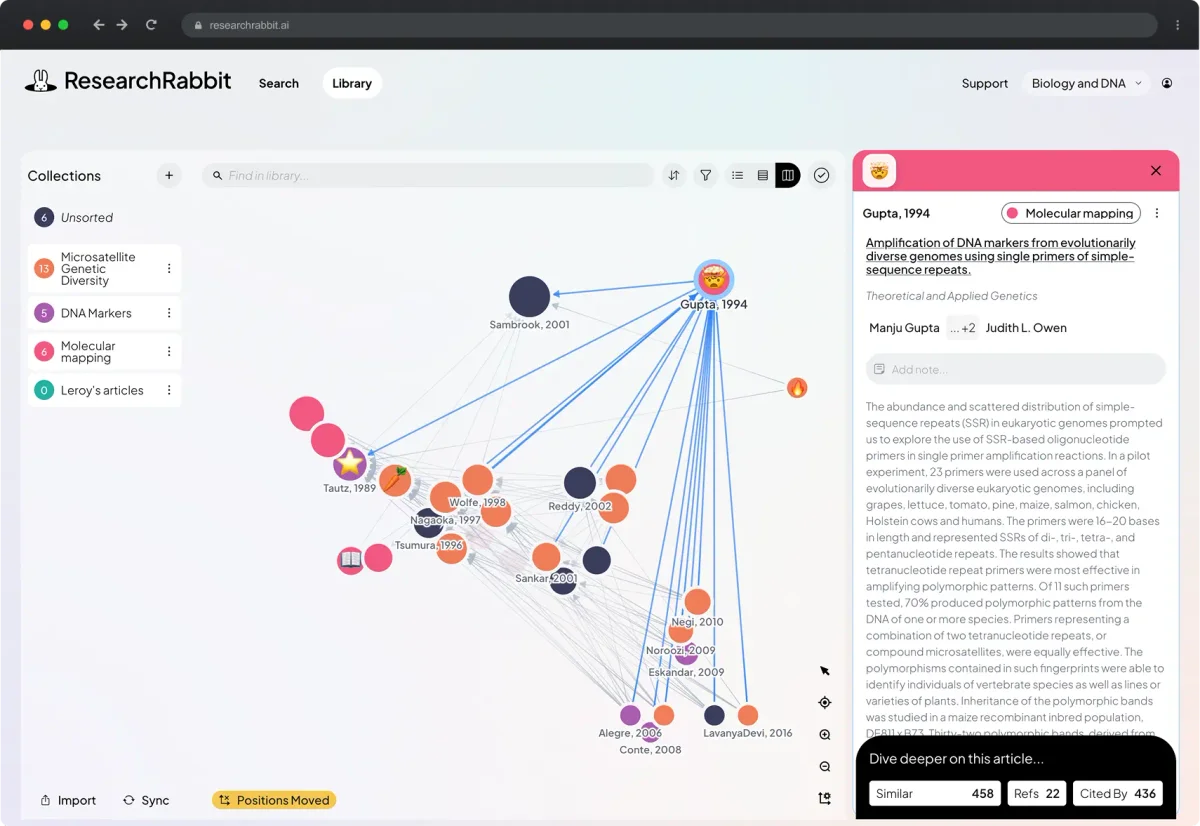
ResearchRabbit workspace UI showing a visual network of research papers and detailed article information in a clean interface.
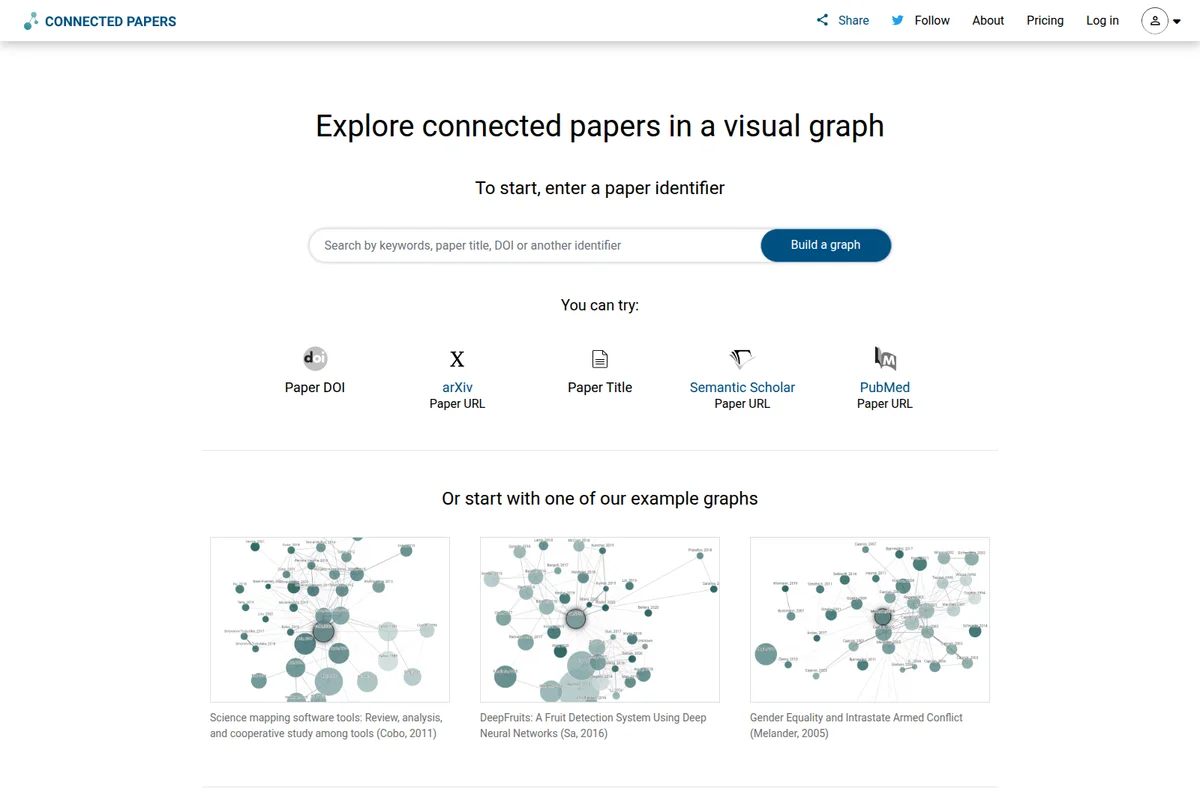
Connected Papers paper exploration interface showing search input for paper identifiers and three example visual graphs.
 ResearchRabbit
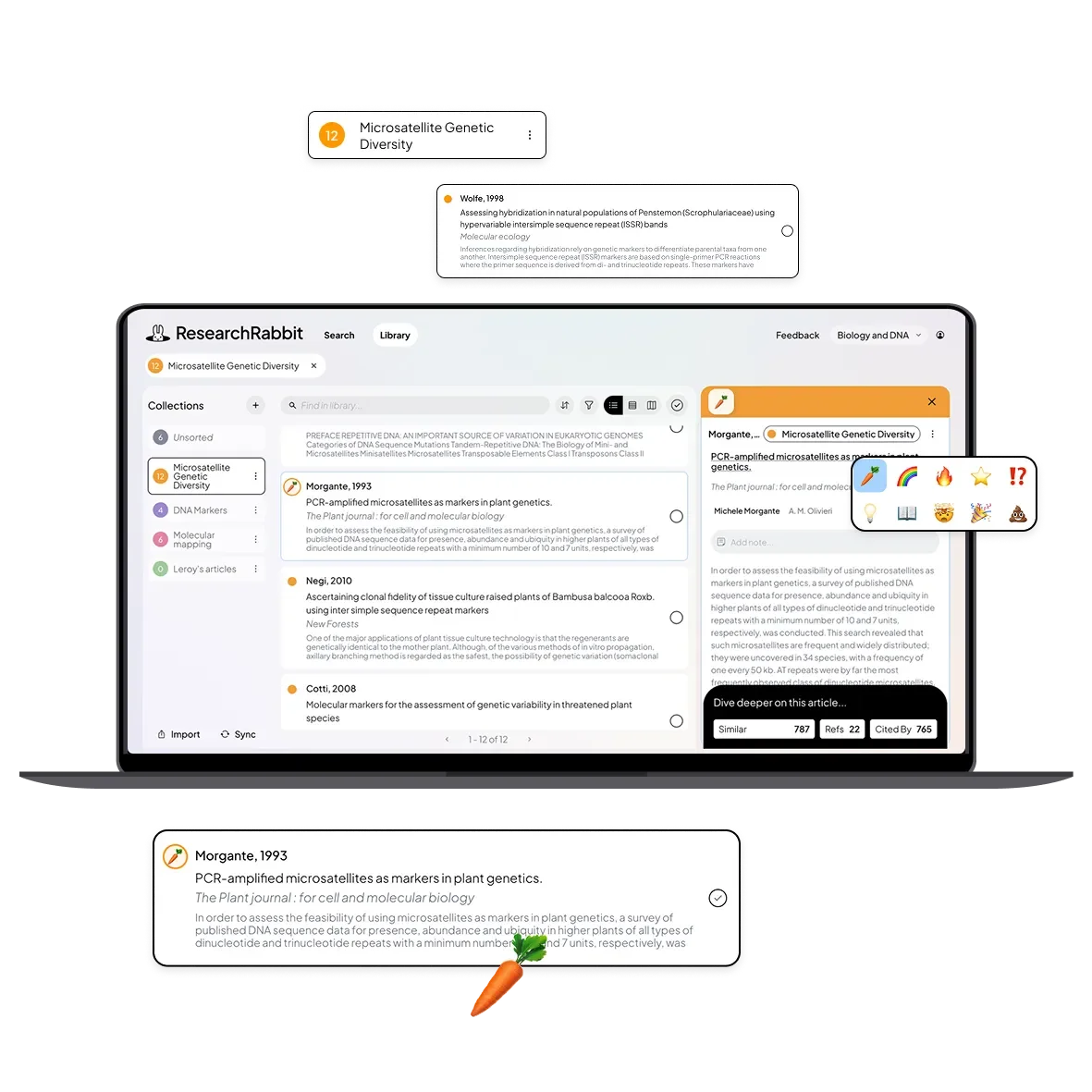
ResearchRabbit workspace UI showing research paper collections and a detailed reference panel with a clean, modern interface.
Connected Papers vs ResearchRabbit Review: Tooliverse Consensus





Based on 2,184 verified reviews across 5 platforms,
combined with Tooliverse's expert analysis
Connected Papers (9.34/10 from 384 reviews) and ResearchRabbit (9.36/10 from 1800 reviews) score nearly identically, but they suit different workflows. Connected Papers is stronger for a fast, no-learning-curve map from one seed paper, with Prior Works and Derivative Works views, though its free tier stops at 5 graphs per month. ResearchRabbit is stronger for ongoing discovery, with adaptive recommendations, Zotero sync and a free tier of 50 seed articles, but reviewers report a steeper learning curve and occasional lag on large collections.
Bottom line: Choose Connected Papers for quick, low-friction maps of a field around one paper. Choose ResearchRabbit if you want continuing recommendations, collections and a generous free tier, and can tolerate a steeper learning curve.
Where Each Tool Wins
Strengths unique to each tool (what both do well is covered further down)
- •Identifies seminal "Prior Art" and "Derivative Works" that traditional searches missmentioned in 156 reviews
- •Provides a clean, distraction-free interface that requires zero learning curvementioned in 84 reviews
ResearchRabbit- •Automates literature discovery by suggesting relevant new papers based on your collectionsmentioned in 289 reviews
- •Offers a completely free platform for researchers without the typical paywallsmentioned in 198 reviews
- •Simplifies the literature review process through an intuitive, Spotify-like discovery interfacementioned in 167 reviews
Each Tool’s Watch-Outs
Drawbacks unique to each tool
- •Free tier is strictly limited to 5 graph generations per monthmentioned in 62 reviews
- •Lacks AI-driven text summarization or synthesis found in newer competitorsmentioned in 41 reviews
- •Requires a paid subscription for high-resolution exports and unlimited historymentioned in 22 reviews
ResearchRabbit- •Steep learning curve for users unfamiliar with graph-based visualization toolsmentioned in 84 reviews
- •Occasional performance lag when handling very large paper collections or complex mapsmentioned in 62 reviews
- •Mobile experience is currently limited compared to the robust desktop web applicationmentioned in 51 reviews
Which Tool Is Best for Your Use Case?
| Use case | ResearchRabbit | |
|---|---|---|
Quick field overview Connected Papers builds a similarity graph from one origin paper with Prior Works and Derivative Works views, while ResearchRabbit's map is part of a broader discovery workflow. | Excellent | Strong |
Ongoing paper discovery ResearchRabbit's Adaptive Recommendation Engine learns from your reading, whereas Connected Papers lacks AI-driven synthesis and recommendations of that kind. | Fair | Excellent |
Free-tier literature reviews Connected Papers' free tier is capped at 5 graphs per month, while ResearchRabbit's free tier offers unlimited searches and up to 50 seed articles. | Fair | Excellent |
Beginners and low learning curve Reviewers cite Connected Papers' zero learning curve, while ResearchRabbit draws 84 mentions for a steep learning curve with graph-based tools. | Excellent | Fair |
Zotero-based reference workflows Both tools are praised for Zotero integration, with 98 mentions for Connected Papers and 215 for ResearchRabbit. | Strong | Strong |

One tool hands you a map; the other keeps hunting for you. The 62 reviewers who hit Connected Papers' cap of 5 graphs per month and the 84 who fought ResearchRabbit's learning curve are describing the same trade: speed now versus depth later. Make the call on workflow. If you need one field mapped this afternoon, start free with Connected Papers; if your review will run for months, start with ResearchRabbit's free 50 seed articles, and move to $10/month billed annually when you need 300.
Connected Papers vs ResearchRabbit Pricing 2026
Connected Papers starts at $6/month on Academic after a free tier to trial it, while ResearchRabbit starts at $12.5/month on ResearchRabbit+ after a free tier to trial it. Over a full year that is roughly $72 for Connected Papers versus $120 for ResearchRabbit with annual billing.
Academic
- Unlimited graphs
- All features included
- For academics, non-profits and personal use
- Billed 72 USD annually
ResearchRabbitResearchRabbit+
- Everything in Free Forever
- Use up to 300 seed articles for large scale reviews
- Advanced search controls for faster discovery
- Multiple projects for focused discovery per topic
- Signals alerts to protect research integrity
The Costs the Pricing Pages Don't Mention
- Free-tier graph cap
- Connected Papers' free tier stops at 5 graphs per month, which can be tight during an active literature review. Unlimited graphs require a paid plan.
- Plan eligibility restrictions
- Connected Papers Academic is limited to academic, non-profit and personal use. Commercial users need Business at $20/month billed annually.
- Paid exports and history
- Connected Papers reviewers note that high-resolution exports and unlimited history require a paid subscription (22 mentions).
- Monthly billing premium
- ResearchRabbit+ costs $12.5/month billed monthly versus $10/month billed annually, so flexibility costs more. Going beyond 50 seed articles requires the paid plan, which allows 300.
Connected Papers vs ResearchRabbit: Feature Comparison
As advertised on each tool's own site — "not advertised" doesn't necessarily mean missing.
| Feature | ResearchRabbit | |
|---|---|---|
| Both tools | ||
| Citation and similarity mapping | ✓ | ✓ |
| Interactive map layout | ✓ | ✓ |
| Database coverage | ✓ | ✓ |
| Saved papers and collections | ✓ | ✓ |
| Institution-wide access | ✓ | ✓ |
| Highlighted by Connected Papers | ||
| Ancestor works view | ✓ | not advertised |
| Follow-up works view | ✓ | not advertised |
| Multiple seed papers at once | ✓ | not advertised |
| Group seat management | ✓ | not advertised |
| Highlighted by ResearchRabbit | ||
| Personalized recommendations | not advertised | ✓ |
| Research integrity alerts | not advertised | ✓ |
| Advanced search settings | not advertised | ✓ |
| Separate topic projects | not advertised | ✓ |
Connected Papers vs ResearchRabbit: User Reviews
Selected to show the range — the strongest praise and the most useful criticism for each.
ResearchRabbit"Connected Papers is the first tool I open when starting a new project. The way it clusters related research is incredibly intuitive and saves me hours of manual citation chasing."
ResearchRabbit"The Zotero integration is a lifesaver. I just sync my folders and the graph updates automatically. It's the most intuitive discovery tool I've used in my PhD so far."
"The visual graph is a game changer for my PhD literature review. It found three seminal papers I completely missed using Google Scholar just by starting with one seed paper."
ResearchRabbit"Finally, a tool that understands how researchers actually think. It doesn't just give you a list; it shows you the conversation between authors."
"Excellent for mapping out a field. Sometimes it misses very new preprints compared to Google Scholar, but for established literature, it's perfect."
ResearchRabbit"Incredible tool for mapping out a new field. The visualizations are beautiful and functional. I wish the export options were a bit more flexible for different citation styles, but it's a minor gripe."
Connected Papers vs ResearchRabbit: Frequently Asked Questions (FAQs)
Is ResearchRabbit or Connected Papers free?
Both have a free tier, but the limits differ. Connected Papers includes all features but caps you at 5 graphs per month. ResearchRabbit's free tier includes unlimited searches, unlimited collections and up to 50 seed articles.
How much do the paid plans cost?
Connected Papers Academic is $6/month billed annually, and Business is $20/month billed annually. ResearchRabbit+ is $10/month billed annually or $12.5/month billed monthly.
Which tool is easier to learn?
Connected Papers, based on reviewer feedback. Reviewers describe its interface as clean with zero learning curve, while ResearchRabbit's watch-outs include a steep learning curve for people unfamiliar with graph-based tools.
Do both tools work with Zotero?
Yes. Zotero integration is a listed win for both: Connected Papers for building a library efficiently and ResearchRabbit for reference management and synchronization.
Which tool recommends new papers automatically?
ResearchRabbit. Its Adaptive Recommendation Engine learns from your reading patterns and interests. Connected Papers is criticized for lacking AI-driven text summarization or synthesis.
Which has a bigger paper database?
ResearchRabbit advertises searching over 310 million academic papers. Connected Papers uses the Semantic Scholar corpus of hundreds of millions of papers, though reviewers note spotty coverage of very recent preprints and niche humanities.
How this comparison works
Consensus Scores aggregate verified reviews from 8 platforms — Reddit, Product Hunt, G2, Capterra, app stores and more — weighted by source reliability.
Features and pricing come from each tool's official site, last verified Sep 29, 2026. Verdicts are computed from this data.
The Editor's Note is our experts' read of what the data means for your decision — and comparison placement is never for sale. Editorial Policy
Related Comparisons
Best Connected Papers & ResearchRabbit Alternatives
Litmaps
Turn scattered citations into a visual map and never miss important research again.

Semantic Scholar
Find, skim, and understand scientific papers faster with free AI-powered search and discovery.
Undermind
Find the papers others miss and build real command of your research field with AI that reads the literature for you.

SciSpace
Discover, understand, and write research papers faster with an AI that actually reads the science with you.