
Connected Papers Review 2026 - Visual Lit Search
Verified Sep 30, 2026 by Tooliverse Editorial
Connected Papers turns a single paper into an interactive graph of related work, so you can spot key studies without digging through reference lists. Researchers use it to cut literature searches from hours to minutes.
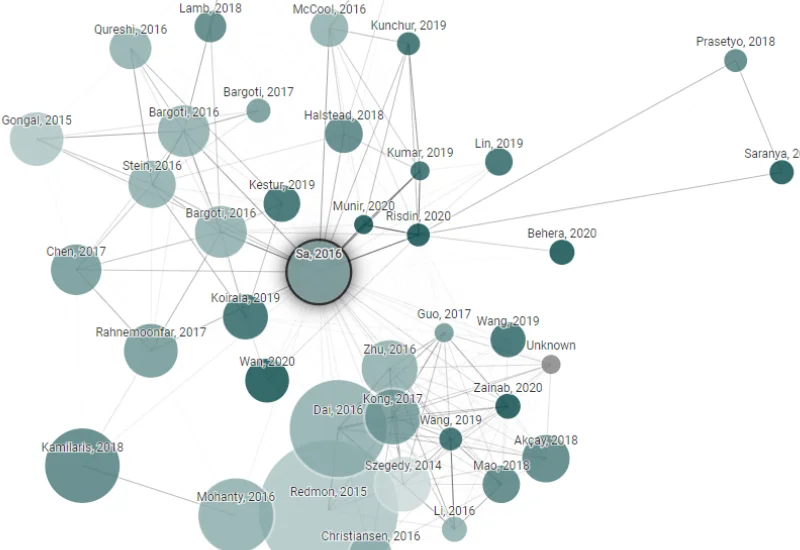
Explore the citation network of research papers to find relevant literature.
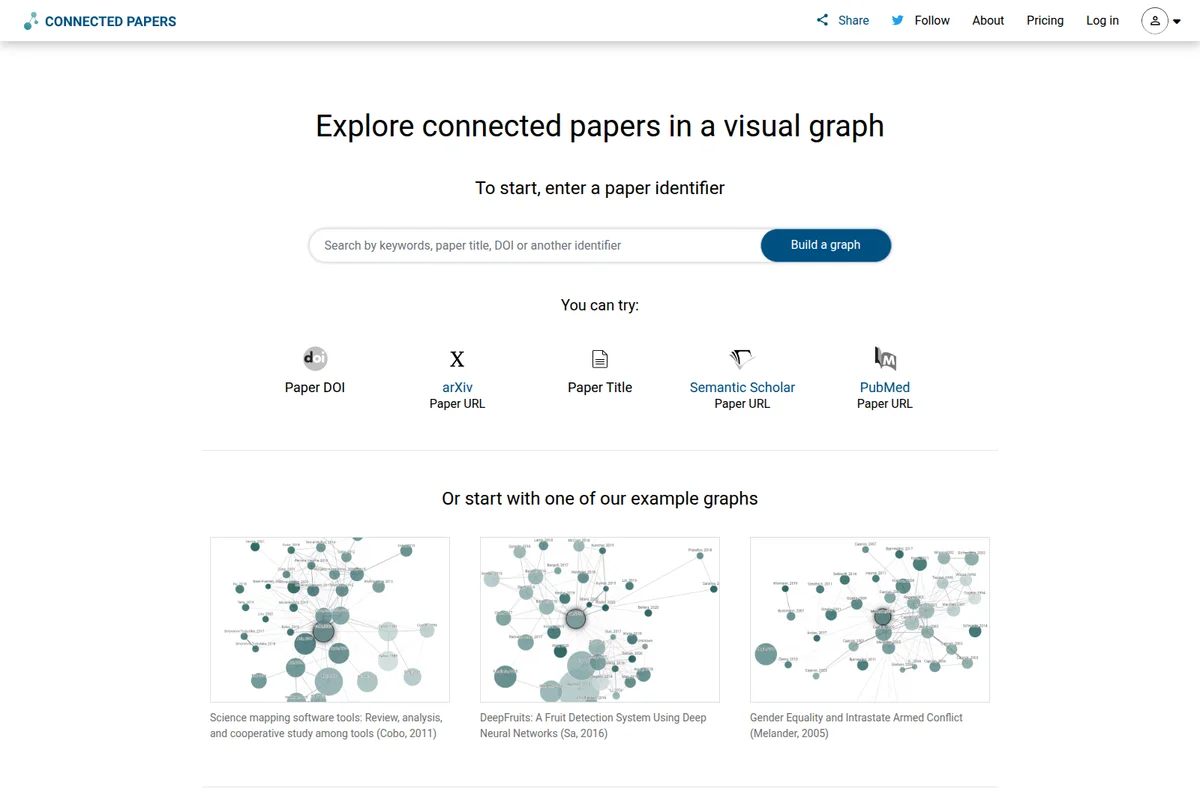
Explore interconnected research papers with example visual graphs.
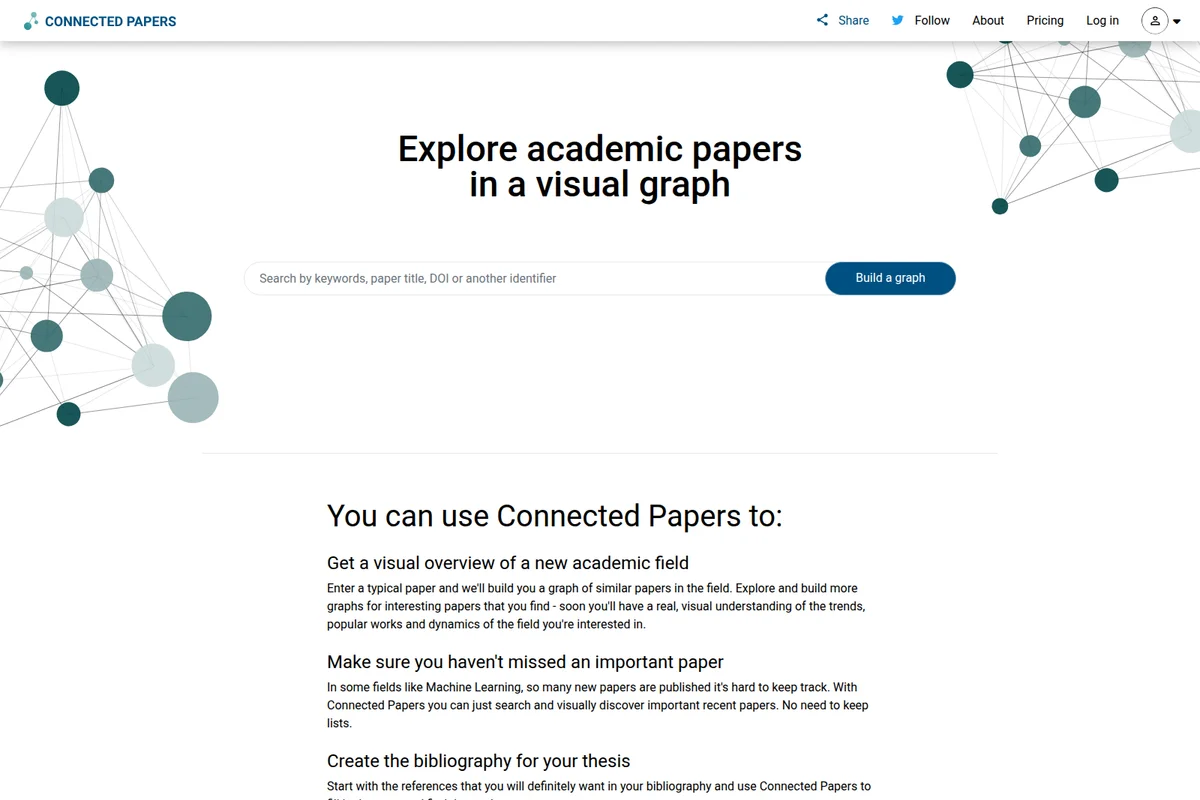
Search for academic papers and visualize connections in an interactive graph.
Connected Papers Review: Tooliverse Consensus





Based on 384 verified reviews across 4 platforms,
combined with Tooliverse's expert analysis
Connected Papers turns literature review from a keyword hunt into a map, arranging related papers by similarity so seminal work and recent follow-ups surface without manual citation chasing. Reviewers praise the Prior Works and Derivative Works views, the Zotero handoff, and an interface that needs no learning curve. The catches are practical: the free tier stops at 5 graphs per month, very recent preprints and niche humanities can be thinly covered, and dense graphs get cluttered. It also offers no AI summarization, unlike newer rivals.
Bottom line: One of the strongest literature discovery tools available, turning a single paper into a navigable research map, though the 5-graph free cap and thin coverage of brand-new preprints will frustrate heavy users.
Connected Papers | Key Specs
- Platforms
- Web
- Pricing Model
- Freemium ($0-20/mo) See plans
- Security
- SSO (Academic Library), PayPro Global hosted checkout See details
- Integrations
- Semantic Scholar, arXiv, PubMed + 1 more
Wins
- •Visualizes complex citation networks into intuitive, navigable research mapsmentioned in 184 reviews
- •Identifies seminal "Prior Art" and "Derivative Works" that traditional searches missmentioned in 156 reviews
- •Accelerates the literature review process by clustering thematically similar papersmentioned in 142 reviews
Watch-Outs
- •Free tier is strictly limited to 5 graph generations per monthmentioned in 62 reviews
- •Database coverage can be spotty for very recent preprints or niche humanitiesmentioned in 48 reviews
- •Lacks AI-driven text summarization or synthesis found in newer competitorsmentioned in 41 reviews
Connected Papers Features 2026
Similarity graphs
Builds a visual graph of the papers most similar to an origin paper, arranged by similarity rather than citation links.
Prior Works view
Surfaces important ancestor works in your field of interest.
Derivative Works view
Finds literature reviews of the field and recent state-of-the-art papers that followed your input paper.
Multi-origin graphs
Build graphs from multiple origin papers at once (included in all plans).
Connected Papers User Reviews
Selected Reviews
"Connected Papers is the first tool I open when starting a new project. The way it clusters related research is incredibly intuitive and saves me hours of manual citation chasing."
"The visual graph is a game changer for my PhD literature review. It found three seminal papers I completely missed using Google Scholar just by starting with one seed paper."
"Excellent for mapping out a field. Sometimes it misses very new preprints compared to Google Scholar, but for established literature, it's perfect."
More from the Community
"Great for finding connections, but I wish the free tier allowed for a few more graphs per month. Five is a bit tight for a busy week of research."
"Useful tool, but the graph gets messy fast if you try to expand too many nodes. Needs better filtering for the visual view to keep it readable."

"Seamlessly integrated with my Zotero workflow. I can push papers directly to my library which saves so much time during the writing phase."
"I love the concept, but the search results can be a bit hit-or-miss for very niche engineering sub-fields compared to specialized databases like Scopus."
"This tool saved me weeks of manual work. Seeing the 'Prior Art' and 'Derivative Works' buttons is a stroke of genius for understanding a paper's lineage."
"Great for finding connections, but I wish the free tier allowed for a few more graphs per month. Five is a bit tight for a busy week of research."
"Useful tool, but the graph gets messy fast if you try to expand too many nodes. Needs better filtering for the visual view to keep it readable."
"Seamlessly integrated with my Zotero workflow. I can push papers directly to my library which saves so much time during the writing phase."
"I love the concept, but the search results can be a bit hit-or-miss for very niche engineering sub-fields compared to specialized databases like Scopus."
"This tool saved me weeks of manual work. Seeing the 'Prior Art' and 'Derivative Works' buttons is a stroke of genius for understanding a paper's lineage."
"The UI is clean and the learning curve is basically zero. Highly recommend for any grad student feeling overwhelmed by the sheer volume of papers."
"A must-have extension. It makes navigating the sea of academic papers feel like exploring a map rather than reading a boring list."
"Connected Papers is the best thing to happen to my research workflow this year. The visual links are incredibly helpful for spotting trends."
"Solid tool. I just wish there was a way to export the graph as a high-res vector for my thesis presentation without the premium plan."
"The UI is clean and the learning curve is basically zero. Highly recommend for any grad student feeling overwhelmed by the sheer volume of papers."
"A must-have extension. It makes navigating the sea of academic papers feel like exploring a map rather than reading a boring list."
"Connected Papers is the best thing to happen to my research workflow this year. The visual links are incredibly helpful for spotting trends."
"Solid tool. I just wish there was a way to export the graph as a high-res vector for my thesis presentation without the premium plan."
Connected Papers Pricing 2026
View SourceThe free tier includes every feature but stops at 5 graphs a month, which is fine for evaluating the approach and tight during an active literature review. Academic at $6/month billed annually removes the cap with the same features, so it's the pick for students and researchers. Commercial users need Business instead, since Academic is restricted to academic, non-profit, and personal use.
Connected Papers In-Depth Review 2026

Connected Papers turns a single paper into a map. You enter a title, DOI, or link, and it builds a graph of the few dozen most closely related works, drawn from Semantic Scholar's corpus of hundreds of millions of papers across many fields. Papers are arranged by co-citation and bibliographic coupling, so closely related work clusters together even when the papers never cite each other. It runs in the browser and hands papers off to Zotero when you find keepers.
What It's Like Day-to-Day
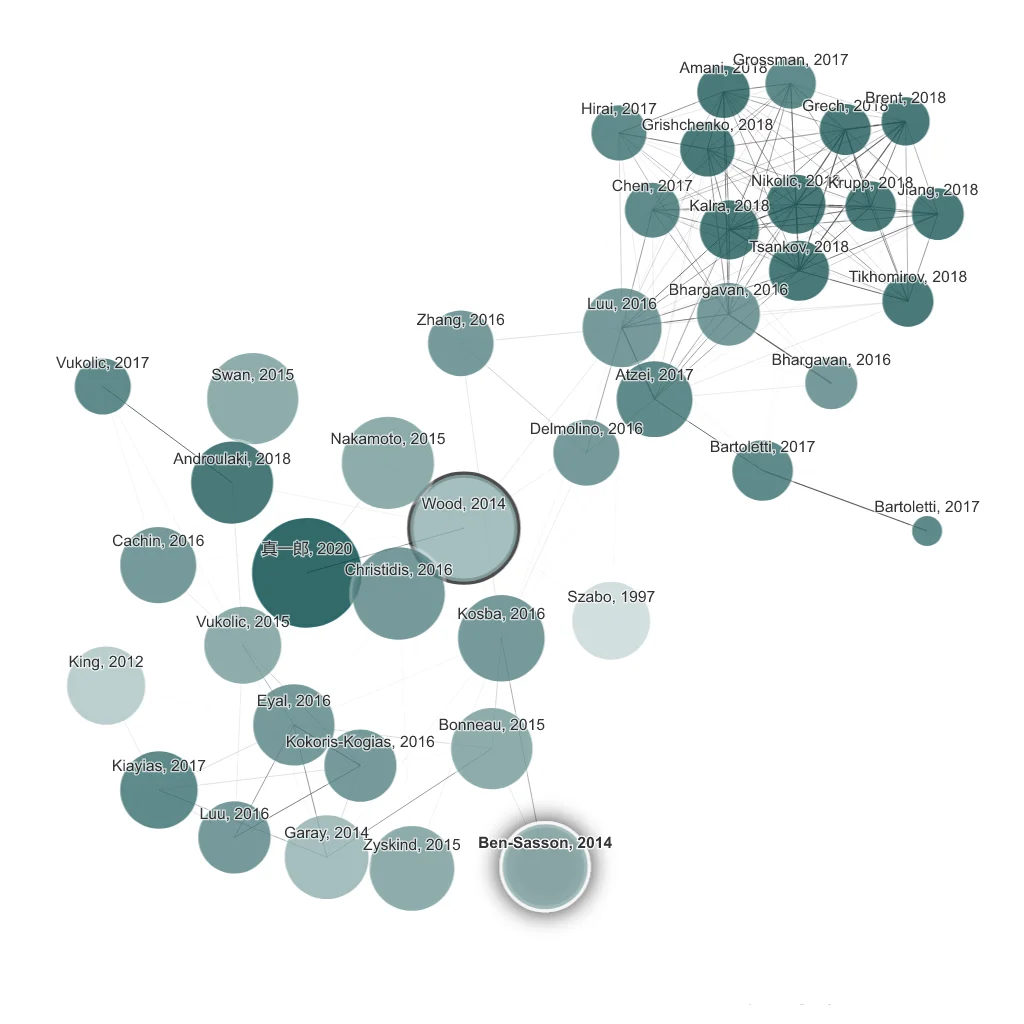
The workflow starts with one seed paper. A PhD student pastes in a typical paper from their area, and Connected Papers returns a force-directed graph where similar work sits close together and dissimilar work drifts apart, with the shortest path from each node back to the origin highlighted. Behind that picture, it sifts roughly 50,000 papers per graph and keeps the few dozen with the strongest connections. Reviewers describe the payoff in concrete terms; one Reddit user said the graph "found three seminal papers I completely missed" in Google Scholar.
Two views do much of the intellectual work.
Connected Papers Security & Compliance
Security Features
- SSO access option (Academic Library plan)
- Checkout hosted by PayPro Global; Connected Papers does not store credit card information
Connected Papers: Frequently Asked Questions (FAQs)
Can I use Connected Papers for free?
Yes, Connected Papers' free tier includes all features and provides 5 graphs per month. Researchers needing more can upgrade to a paid plan.
How much does Connected Papers cost?
Academic costs 6 USD/month (billed 72 USD annually) and Business costs 20 USD/month (billed 240 USD annually), both with unlimited graphs. Group plans cost the same per seat.
What is the difference between the Academic and Business plans?
Academic is for academic institutions, non-profits and personal use, while Business is for commercial or for-profit work. Both offer unlimited graphs and the same features.
What if I can't afford a Premium plan?
Connected Papers offers a scholarship program for researchers who truly cannot afford a subscription. Email scholarships@connectedpapers.com to request a discounted or free Premium plan.
Connected Papers Integrations
| Semantic Scholar | arXiv | PubMed |
| PayPro Global |
Connected Papers: Verified Data Sheet
| # | Label | Data Point |
|---|---|---|
| [1] | Connected Papers Consensus: 9.34/10 | Connected Papers is one of the highest-rated AI research tools in the Tooliverse index, with a consensus score of 9.34/10 across 384 verified reviews. |
| [2] | What is Connected Papers | Connected Papers is a visual literature discovery tool built by a team of 4 friends, using Semantic Scholar's corpus of hundreds of millions of papers. It has a free tier of 5 graphs/month, with unlimited plans from $6/month. |
| [3] | Tooliverse Consensus on Connected Papers | Connected Papers turns literature review from a keyword hunt into a map, arranging related papers by similarity so seminal work and recent follow-ups surface without manual citation chasing. Reviewers praise the Prior Works and Derivative Works views, the Zotero handoff, and an interface that needs no learning curve. The catches are practical: the free tier stops at 5 graphs per month, very recent preprints and niche humanities can be thinly covered, and dense graphs get cluttered. It also offers no AI summarization, unlike newer rivals. |
| [4] | Connected Papers Verdict | Connected Papers bottom line: One of the strongest literature discovery tools available, turning a single paper into a navigable research map, though the 5-graph free cap and thin coverage of brand-new preprints will frustrate heavy users. |
| [5] | Free: Free | Connected Papers offers a Free tier that includes 5 graphs per month at no cost. |
| [6] | Intuitive visual research maps | Connected Papers turns complex citation networks into intuitive, navigable research maps, a strength cited in 184 user reviews, more than any other capability. |
| [7] | Finds prior art and derivative works | Connected Papers surfaces seminal Prior Works and Derivative Works that traditional keyword searches miss, according to 156 user reviews. |
| [8] | Clusters similar papers to speed reviews | Connected Papers speeds up literature reviews by clustering thematically similar papers with a Force Directed Graph layout, a benefit reported in 142 user reviews. |
| [9] | Academic: $6/mo (annual) | Connected Papers Academic gives users unlimited graphs for $6/month billed annually, well beyond what the free tier allows. |
| [10] | Zotero integration for library building | Connected Papers integrates with reference managers such as Zotero, letting researchers push papers straight into their libraries, according to 98 user reviews. |
| [11] | Free tier limited to 5 graphs monthly | Connected Papers caps its free tier at 5 graph generations per month, a limit 62 user reviews describe as tight during busy research weeks; unlimited graphs start at $6/month billed annually on the Academic plan. |
| [12] | Spotty coverage for new preprints, niches | Connected Papers can show spotty coverage of very recent preprints and niche humanities or engineering sub-fields, according to 48 user reports; graphs draw on the Semantic Scholar corpus. |
| [13] | Enterprise: SSO access option (Academic Library plan) | Connected Papers offers enterprise security through an SSO access option (Academic Library plan) and Checkout hosted by PayPro Global; Connected Papers does not store credit card information. |
| [14] | Found seminal papers Google Scholar missed | Connected Papers "found three seminal papers I completely missed using Google Scholar just by starting with one seed paper," according to a verified Reddit reviewer. |
Compare Connected Papers with…
Best Connected Papers Alternatives
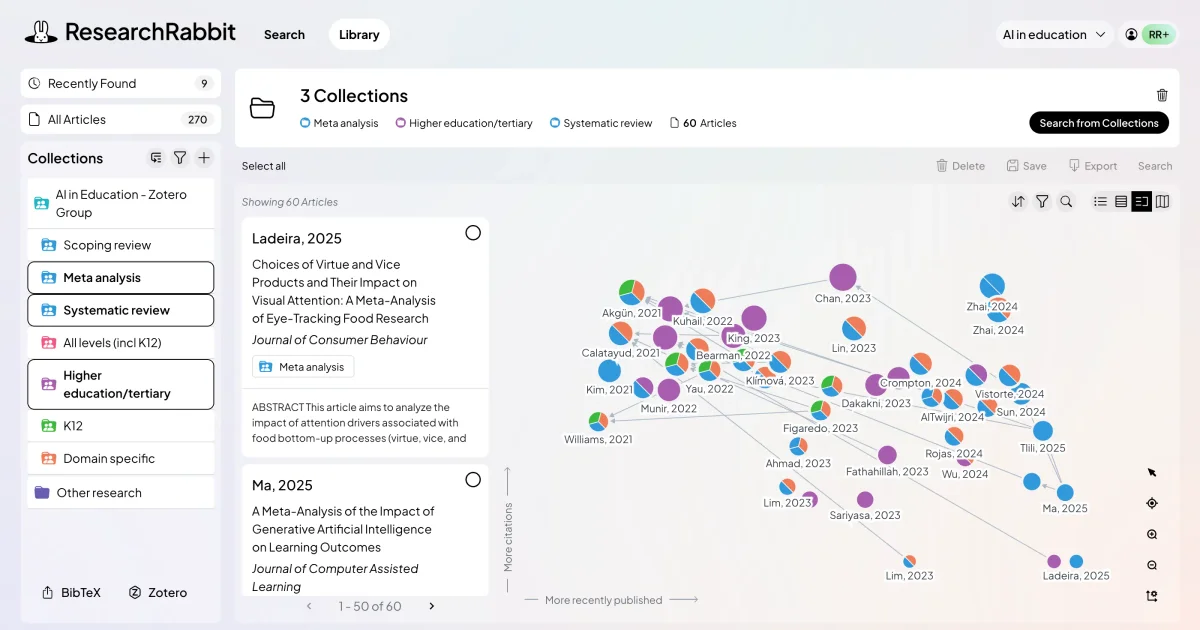
ResearchRabbit
Turn one paper into a map of ideas and finally see where your research should go next.
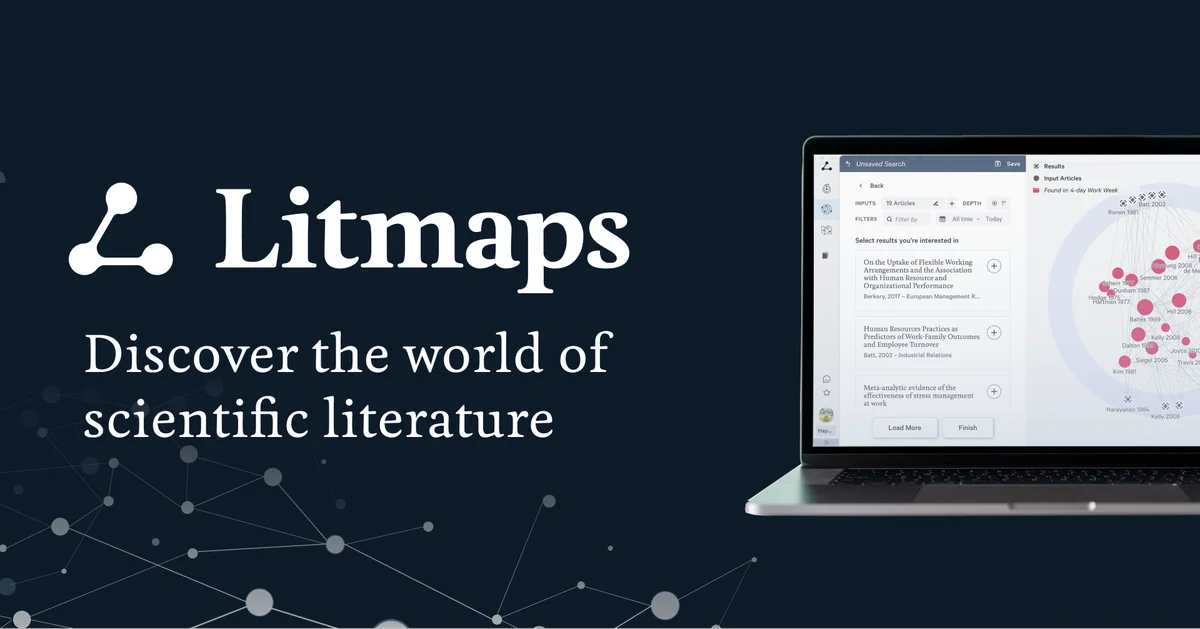
Litmaps
Turn scattered citations into a visual map and never miss important research again.
Semantic Scholar
Find, skim, and understand scientific papers faster with free AI-powered search and discovery.